
Technology
The fastest charging technology on the market.
620kW today. 1.5 MW available. Built to stay ahead of the vehicles it charges.
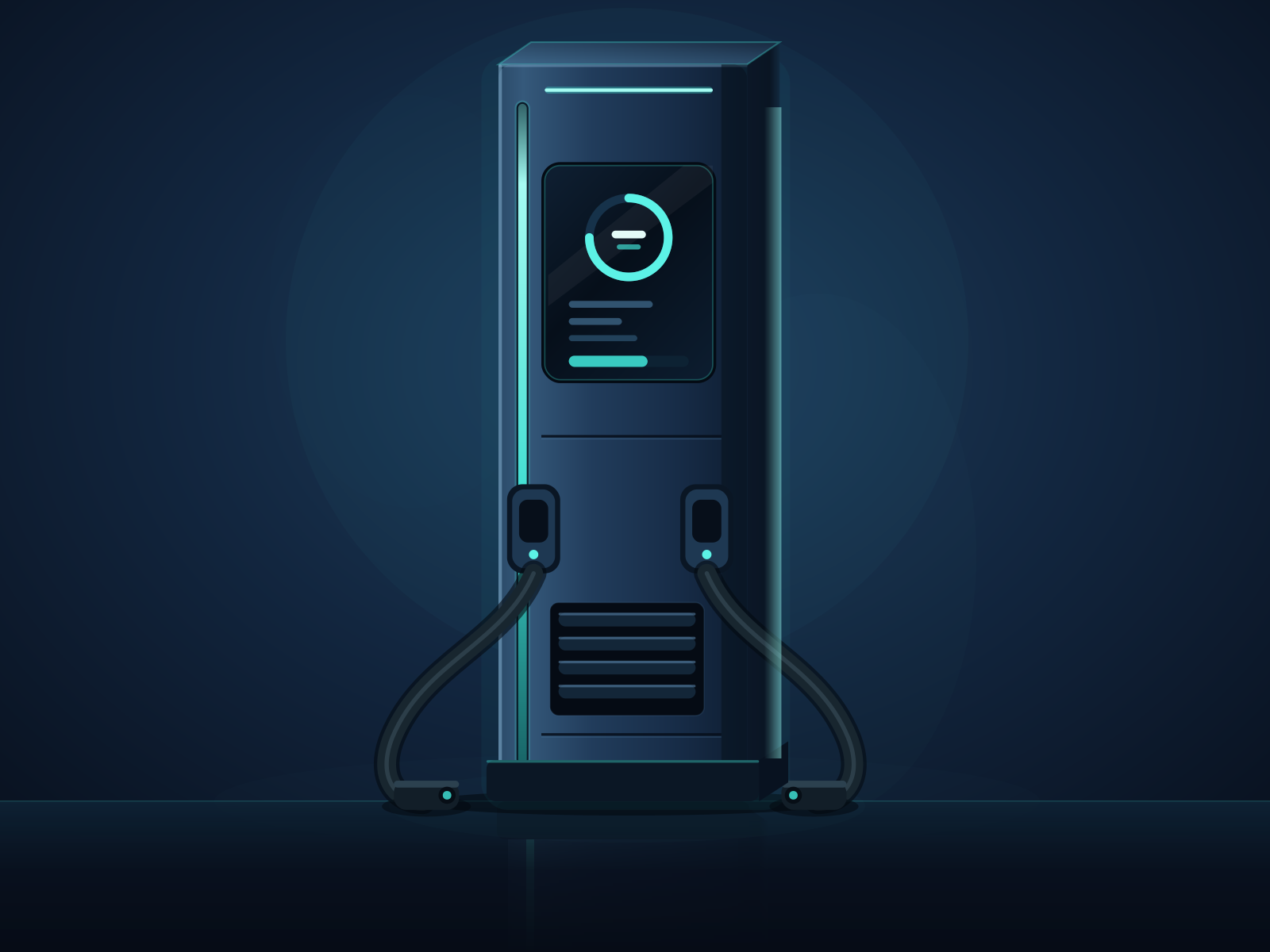
Level-3 DC Extreme Fast Chargers
XFC — Extreme Fast Charging
Our flagship chargers deliver up to 620kW per chassis, with one power box feeding two dispensers — two vehicles charging at once, from a compact footprint built for rapid deployment.
XFC Level-3 DC — Specifications
- Output Power
- 620kW per chassis (one power box per 2 dispensers)
- Output Voltage Range
- 200–1000V DC
- Output Current
- 200A
- Connectors
- CCS1, NACS (Tesla)
- Operating Temperature
- −30°C to +50°C
- Protection Class
- IP68 (dispenser), IP54 (power rectifier)
- Standards
- IEC 62196, IEC 61851, DIN 70121, ISO 11851
- Communication
- OCPP 2.0.1 with extensions — real-time BMS communication, dynamic power adjustment, state-of-charge feedback
Level-2 Chargers
Everyday charging, done right.
For homes, businesses, and fleets that need reliable overnight or workplace charging.
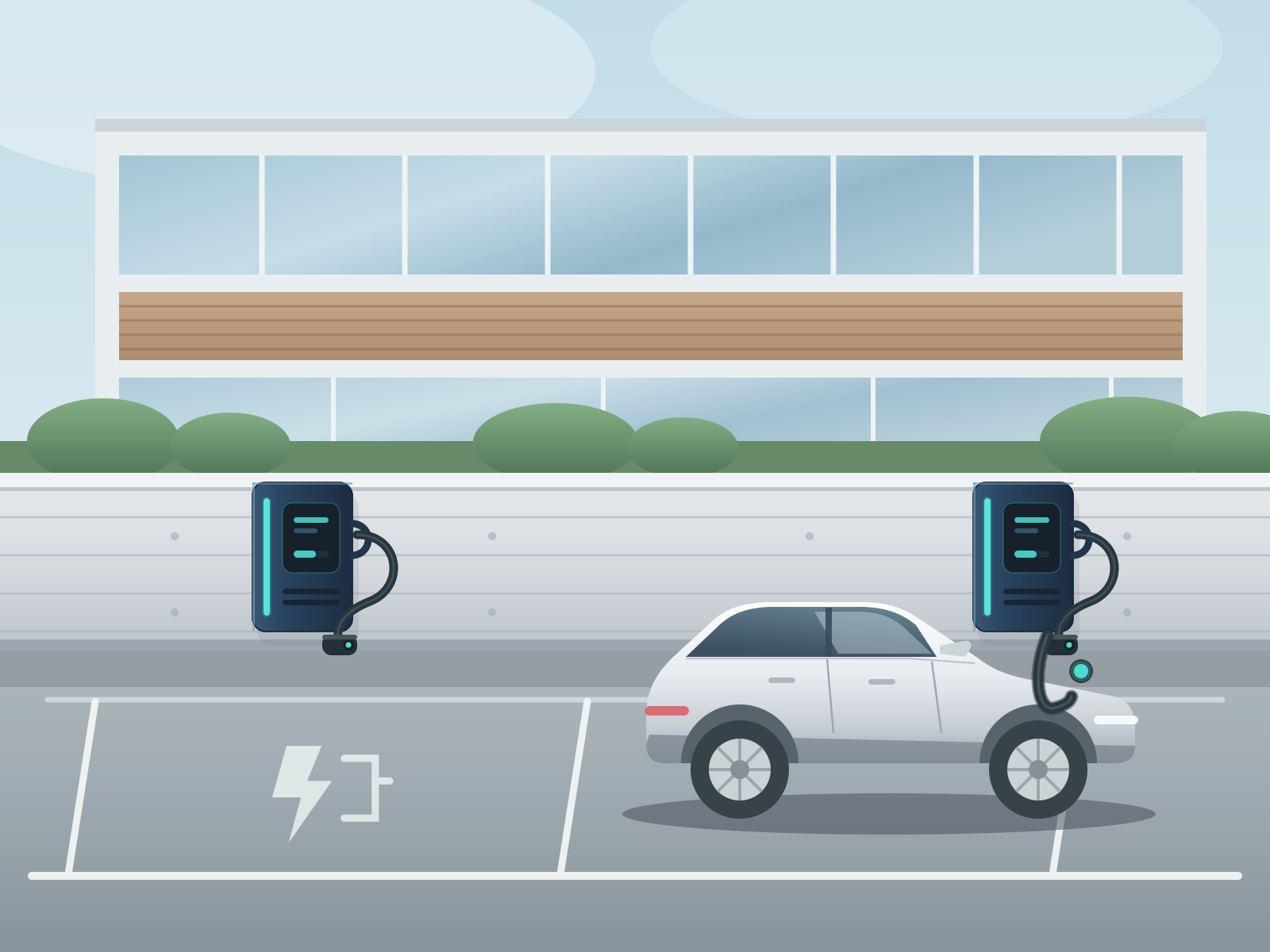
Level-2 AC — Specifications
- Output Power
- Up to 22kW
- Rated Input
- 400VAC, 50/60Hz (3P+N+PE)
- Output Current
- Up to 32A
- Connector
- Universal J1772
- Operating Temperature
- −40°C to +50°C
- Protection Class
- IP65, Class I
- Standards
- EN IEC 61851-1:2019
What Makes ioCharge Different
Every spec on this page is a decision competitors didn't make.
ioCharge
Traditional chargers
Covers every EV sold in North America — CCS1 and NACS
Chargers locked to a single connector standard
Up to 620kW per chassis
Most public chargers capped below 350kW
Advanced OCPP 2.0.1 communication — real-time and two-way
Basic OCPP integration with no dynamic feedback
Modular, upgrade-ready hardware
Fixed architecture requiring full replacement
One power box per charger
Multi-box systems from other manufacturers
Advanced cooling and built-in safety protocols that protect vehicle and station during high-speed sessions
Thermal limits that throttle sessions or shorten hardware life
Looking Ahead
1.5 MW today, and what comes after it.
With 1.5 MW systems already available, the harder question is where the power comes from. ioCharge is working with its manufacturing partner on solar, hydrogen, and energy storage integrations to keep charging fast, resilient, and increasingly sustainable — including pavement-integrated photovoltaic (PIPV) designs that let charging stations help generate the power they use.
Spec a site with our team.
Tell us the location, the power available, and the vehicles — we'll tell you what it takes.